

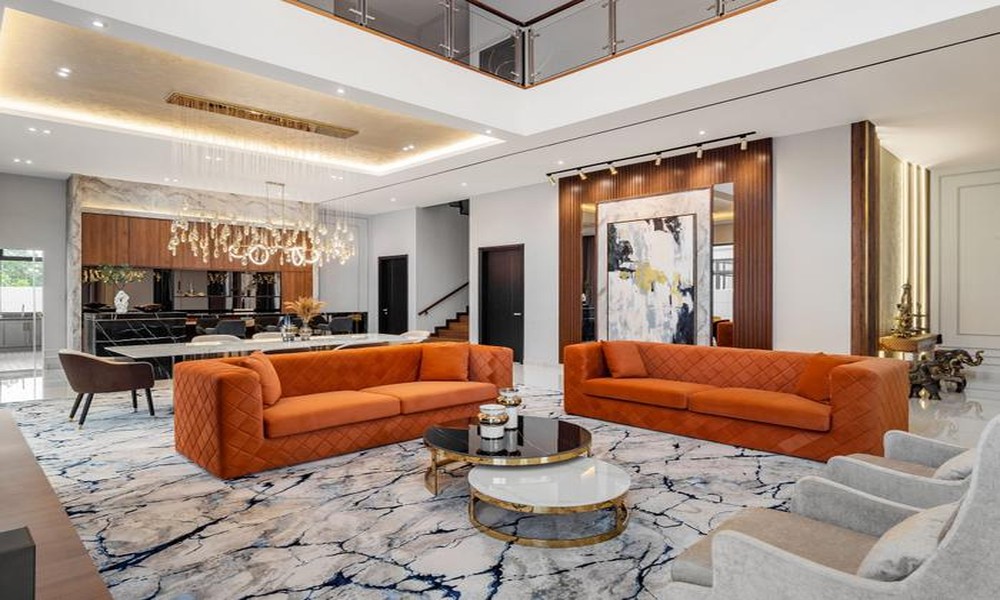
Walk into a modern home in Johor Bahru today, and you’ll notice something subtle but important.
Rooms are no longer strictly defined. The living room isn’t just for relaxing. The dining area isn’t just for meals. Even bedrooms are starting to take on multiple roles.
Instead, spaces are becoming more flexible, more adaptable, and far more practical for everyday life.
This shift toward multi-functional living isn’t just a design trend-it’s a response to how people actually live now.
Here’s what’s driving it, and how it’s shaping modern homes in Johor Bahru.
1. Homes are doing more than ever before.
A home today isn’t just a place to rest.
It’s also:
- A workspace
- A social space
- A place for hobbies
- Sometimes, even a learning environment
With so many functions happening under one roof, it no longer makes sense for each room to serve just one purpose.
In many homes across Johor Bahru, this has pushed interior design toward flexibility rather than fixed usage.
2. Space limitations are driving smarter design.
Not every home has the luxury of extra rooms.
Condos, apartments, and even some landed homes are designed with compact layouts.
This makes multi-functional home design less of an option and more of a necessity.
Instead of adding more rooms, homeowners are:
- Combining functions within the same space
- Using furniture that serves multiple purposes
- Designing layouts that can adapt throughout the day
The result is a home that feels more efficient without needing more square footage.
3. Furniture is becoming more adaptable.
One of the biggest changes is in furniture selection.
Traditional furniture had one fixed role.
Now, more homeowners are choosing:
- Sofa beds for both seating and sleeping
- Extendable dining tables for daily use and hosting
- Storage beds that double as organisation solutions
- Foldable or movable pieces that can be reconfigured
In homes in Johor Bahru, these choices allow spaces to shift quickly depending on the need.
4. Open layouts support flexible living.
Open-plan designs have become more popular for a reason.
They remove rigid boundaries between spaces, making it easier to:
- Reconfigure furniture
- Combine activities
- Adjust how the space is used
For example:
- A living room can extend into a dining area for gatherings
- A corner can become a temporary workspace
- Open space allows more movement and adaptability
This kind of layout supports multi-functional living much more naturally than closed-off rooms.
5. Storage is being integrated more intentionally.
Multi-functional spaces only work if clutter is controlled.
Otherwise, the space quickly feels chaotic.
That’s why modern interior design places strong emphasis on:
- Built-in storage
- Hidden compartments
- Furniture with storage features
When storage is planned well, it becomes easier to switch between functions without constantly reorganising the entire space.
6. Zoning replaces rigid room divisions.
Instead of walls, many homes now use zoning to define areas.
This can be done through:
- Rugs to separate seating areas
- Lighting to highlight different zones
- Furniture placement to create boundaries
- Subtle changes in materials or colours
Zoning allows a single space to serve multiple purposes while still feeling organised.
In many homes across Johor Bahru, this approach makes spaces feel both open and structured at the same time.
7. Flexibility supports changing lifestyles.
One of the biggest advantages of multi-functional design is adaptability.
Life changes:
- Work-from-home needs may increase or decrease
- Families grow or shrink
- Daily routines evolve
A flexible home can adjust without needing a full renovation.
For example:
- A study corner can become a kids’ area
- A guest space can double as a home office
- A dining area can transform into a workspace during the day
This adaptability makes the home more future-proof.
8. Design is becoming more practical than decorative.
There’s a noticeable shift away from purely aesthetic design.
Instead of focusing only on how a space looks, homeowners are asking:
- “How will I use this daily?”
- “Will this still work a year from now?”
- “Can this space adapt if my needs change?”
In Johor Bahru, this mindset is shaping more practical, thoughtful interiors.
Spaces are still visually appealing but functionality comes first.
9. Multi-functional design reduces unused space.
In traditional homes, certain rooms are underused:
- Formal dining areas used occasionally
- Guest rooms rarely occupied
- Corners that serve no real purpose
Multi-functional design eliminates these “dead spaces.”
Every area has a role, even if that role changes throughout the day or week.
This makes the home feel more efficient and better utilised overall.
Final Thoughts
The shift toward multi-functional living spaces isn’t just about saving space.
It’s about making homes work better for real life.
In modern homes across Johor Bahru, this approach allows people to:
At the end of the day, it’s not about having more rooms.
It’s about making every room work harder and smarter for the way people actually live.